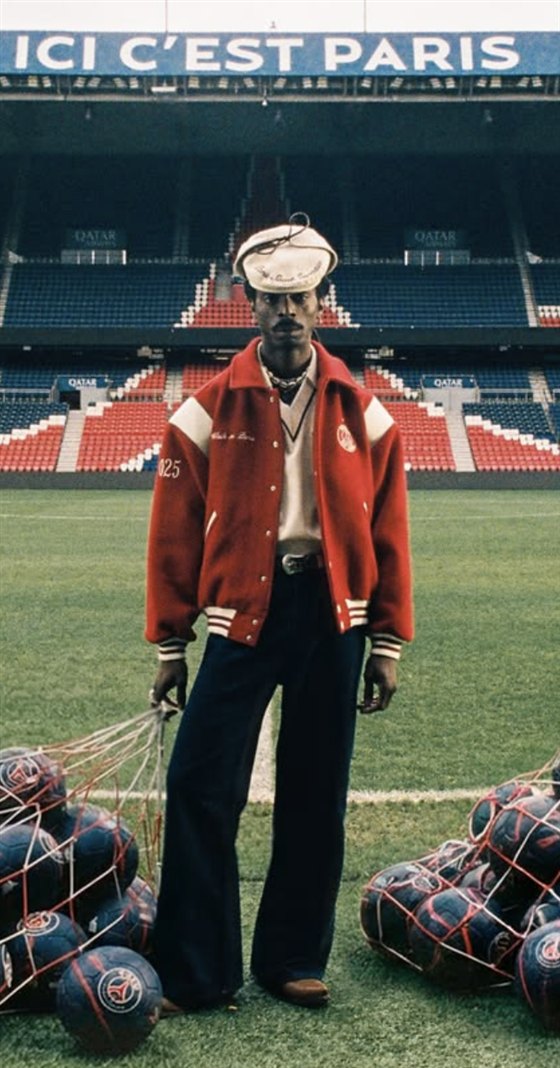
01 The Deal
In September 2021, Paris Saint-Germain announced a two-year partnership with Christian Dior. Kim Jones, artistic director of Dior’s menswear, would personally design the club’s official wardrobe, from the formalwear worn to matches to the casual pieces worn for travel. The deal marked the first time Dior had dressed a sports club, replacing PSG’s previous wardrobe agreement with Hugo Boss.
The timing amplified the launch: only weeks earlier, Lionel Messi had been unveiled as a PSG player in a suit from the Dior capsule, and the announcement post drew more than eight million likes. The partnership outlasted the original two-year term, with PSG presenting a third season of Dior formalwear for 2023/24 and Kylian Mbappé named a global ambassador for the house, extending the relationship from the club to the athlete.
02 The Asset Exchange
Every partnership is a trade in which each side owns something the other cannot build alone.
What Dior brought to the table
- Design authority. Kim Jones, one of the most influential figures in menswear, designed the collections himself, giving the partnership the weight of authorship rather than a licensed logo.
- Luxury legitimacy. The Dior name lifted PSG from a fashionable club to a fashion institution.
- Craft and storytelling. Dior brought decades of tailoring and a design language rooted in Parisian heritage.
What PSG brought to the table
- The most photographed tunnel walks in world football. Pre-match arrivals had become a runway, and PSG’s drew the largest audience in the sport.
- Living billboards. Players like Messi and Mbappé, among the most followed athletes on earth, wore the product in unstaged, high-emotion moments.
- A young, culturally fluent audience. PSG brought a global following Dior had struggled to reach through fashion week or traditional luxury media.
03 Why the Fit Works
The easy explanation is geography: Dior and PSG are two Parisian institutions sharing a city and an identity built on elegance and global ambition. Geography is true but misses the deeper reason. PSG had already done the cultural groundwork with Jordan Brand, launched in 2018, turning the club from a football team into something closer to a streetwear label with a stadium. By the time Dior arrived, the audience already read PSG as a fashion property, so the house was moving onto prepared ground and taking the club upmarket from streetwear toward luxury. The sequencing is the lesson: the strongest partnerships build on what came before them.
04 The Proof
Four signals show the partnership delivered.
- The Messi moment. The most scrutinized transfer unveiling in football history happened in Dior, a placement no media buy could have purchased.
- The renewal. The two-year deal extended into a third season, a renewal no weak partnership would have earned.
- The ambassador pipeline. Mbappé’s appointment as a Dior global ambassador turned the club deal into a talent pipeline for the house.
- The counterfeit test. In 2026, an AI-generated concept kit fusing the club’s fashion and sportswear partners went viral, and replica sellers rushed to sell a product no one had ever made.
05 My Take
The partnership’s greatest strength doubled as a limit. Living almost entirely off the pitch, the collaboration never produced a product an ordinary fan could buy. The value lay in image rather than merchandise, keeping the partnership clean and premium while leaving a lot of reach on the table.
The broader lesson: the strongest partnerships move onto prepared ground. Dior worked because PSG’s Jordan era had already trained the audience to read the club as a fashion property, so the move felt inevitable. Before attaching to a festival or an action sports circuit, a brand should ask whether the culture is ready, or whether the leap is too far to ask of the audience.
Authenticity lives in the unstaged moment, the tunnel walk or the unveiling no one can script, more than in any paid placement. Evolving the partnership, I would stop dressing only the players and design a product a fan could own, built around a ritual the audience already cares about, the way Red Bull anchors activations to the moments people show up for.
All factual claims are sourced from club and press announcements from September 2021, Business of Fashion, Reuters, and SoccerBible coverage of the 2021 launch and 2023/24 collections.